New
USB DVB-T /ISDB-T /DVB-C
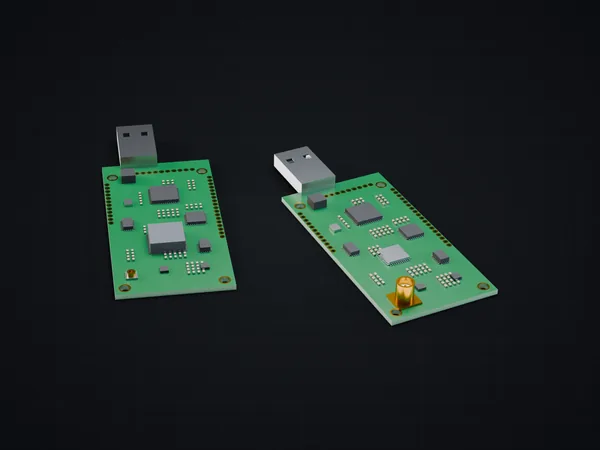
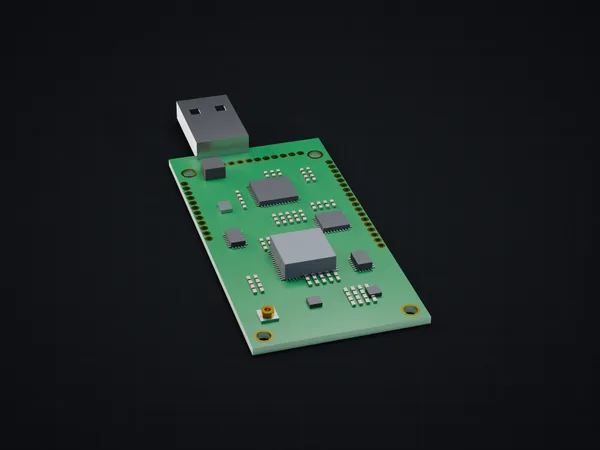
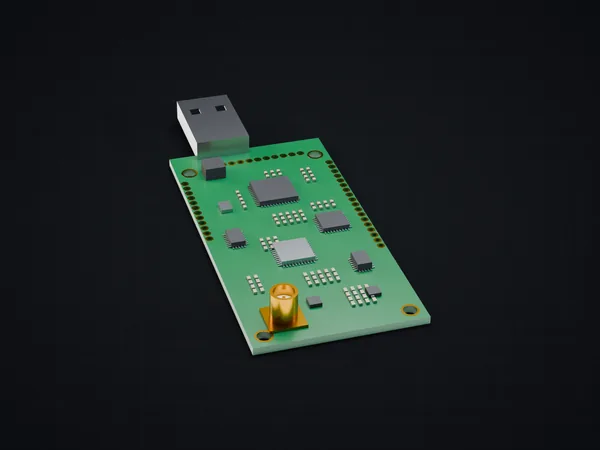
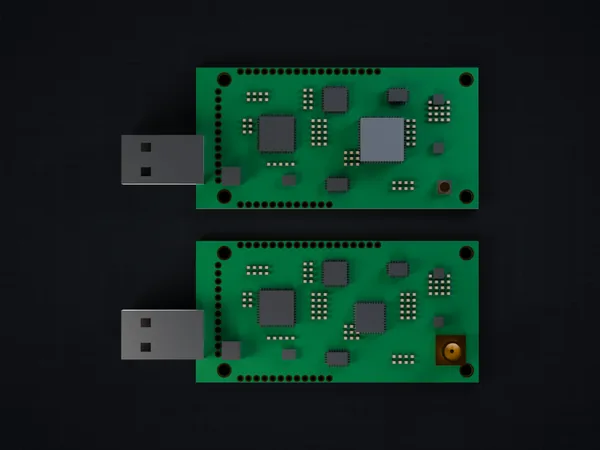
Across both models, 1 kHz steps50– 2500 MHz UT-220 max RF output (100–470 MHz )+ 10 dBm UT-220 MER in VHF/UHF > 39 dB USB bus power, 67 × board35 mm 5 V
Overview
[ Signal chain ]
One modulator core. Two ways up to RF.
Host PC Player or SDK app
HD9528
Modulator core TS · FEC · COFDM / QAM · I/Q DAC
ADRF6755 I/Q modulator · PLL / VCO
RF out
Host PC Player or SDK app
HD9527 · one chip
Modulator core TS · FEC · COFDM / QAM · I/Q DAC
LO + mixer On-chip
RF out
Host PC Player or SDK app
HD9528
Modulator core TS · FEC · COFDM / QAM · I/Q DAC
ADRF6755 I/Q modulator · PLL / VCO
RF out
Host PC Player or SDK app
HD9527one chip
Modulator core TS · FEC · COFDM / QAM · I/Q DAC
LO + mixer On-chip
RF out
- USB — TS and control
- I/Q baseband
- RF out
[ HD9520 inside ]
From transport stream to RF, in hardware
01 · Transport stream
- PID filtering
SI/ PSI table insertion - Null packets for rate adaptation
- PCR re-stamping, so null insertion adds no jitter
02 · Channel coding
DVB-T /ISDB-T : energy dispersal, RS(204,188), punctured convolutional code, bit and symbol interleaving- QAM: RS(204,188) with an I = 12 interleaver; J.83B adds RS(128,122), trellis and Level 1/2 interleaving
03 · Modulation
QPSK, 16-QAM or64-QAM on a 2K/4K/8K IFFT with guard interval (COFDM)- Or root-raised-cosine shaped QAM
04 · Output
Rate converter, I/Q DAC and low-pass filterHD9527: on-chip LO and mixer to RFHD9528: zero-IF I/Q for an external up-converter
Two family members
- HD9527
On-chip LO and mixer; RF 50–950 MHz in1 kHz steps — used in theUT-221 - HD9528
Zero-IF complex baseband I/Q, mixer not connected — used in theUT-220
[ RF output ]
Where each model reaches, and how strong
−10−50+5+10 05001000150020002500 RF output (dBm) Frequency (MHz) +10 dBm +7 dBm +5 dBm −5 dBm UT-221 · −5 dBm UT-220
-
100– 470 MHz + 10 dBm > 39 dB -
470– 950 MHz + 7 dBm > 39 dB -
950– 1900 MHz + 5 dBm > 36 dB -
1900– 2500 MHz − 5 dBm > 34 dB
-
50– 950 MHz − flat5 dBm 35 dB
[ Field record ]
The chips behind FPV video on unmanned vehicles
300km Longest HD video link
- 01Drones (UAV)
- 02Unmanned surface vessels
- 03Other unmanned vehicles
Achievable range depends on the external power amplifier, antennas and line of sight. It is the chip family’s record, not the reach of the USB module on its own.
[ Applications ]
From the test bench to the airframe
The same stick drives an FPV link, a lab signal source or a small TV headend.
-
FPV video links HD video on drones at high speed and long range
-
Unmanned boats and vehicles Surface vessels and ground vehicles
-
Signal generator and R&D DVB-T ,ISDB-T ,DVB-C andQAM-B for test and demonstration -
Mini-headend Hotel, hospital, campus, corporate, mall and stadium TV
-
Digital signage Over coax or wireless links
-
On-board TVBuses, trains and ships; wireless display
-
Live sports and surveillance
Live events, monitoring and industrial video
-
Amateur digital TV The UT-220 also covers the1.2 GHz and2.4 GHz bands
[ Software ]
Free player, free SDK
Both models ship with the same software, so an application written for one runs on the other.
Included
- Windows stream player for TS files and live streams
- Windows and Linux SDK with USB drivers and the HD9520 API
Host requirements
- CPUIntel, AMD, ARM or MIPS
- Memory128 MB RAM or more; more if the host also decodes audio and video
- Port
One free USB 2.0 port; USB 1.1 runs the UT-220 at 3–5 Mbps of TS
[ Build with HiDes ]
Take the module, the design or the chip
- 01
Custom modules Tailored versions of the UT-22x for your application, such as FPV video links. - 02
Reference design The complete UT-22x reference circuit design, to build your own hardware. - 03
Simple circuit · no DRAM · low BOM cost
HD9520 chip supply HD9527 and HD9528 chips from the HD9520 family, for in-house production.
Specifications
System features
- 01
Full hardware modulation — DVB-T ,ISDB-T /Tb, DVB-C andITU-T J.83 Annex A/B/C, with no host CPU load for coding or modulation - 02
The host streams an MPEG-2 transport stream over USB; data and control share the same link - 03
Powered from the 5 V USB bus — no external adapter - 04
DVB-T bandwidth 1–8 MHz ,1 kHz RF tuning step - 05
ISDB-T 1-layer (13 segments) and2-layer (12 + 1 segments) - 06QAM up to 256, 2–6.96 MSymbol/s; full J.83B Level 1/2 interleaving
- 07
Built-in TS demultiplexer (PID filtering), PCR re-stamping and SI/PSI table insertion - 08Free Windows stream player; free Windows and Linux SDK
Model options
-
UT-220 Wideband · 100– 2500 MHz - HD9528 + ADRF6755
-
External I/Q up-converter — VHF, UHF, L-band and2.4 GHz -
Up to + 10 dBm , MER >39 dB in VHF/UHF -
I-PEX output withI-PEX-to-SMA cable - USB 2.0 (USB 1.1 supported)
-
UT-221 VHF/ UHF · 50– 950 MHz - HD9527
-
On-chip LO and mixer — direct RF output -
Flat − 5 dBm across the band, MER35 dB -
Carrier suppression > 50 dB - Lower cost and power
Both models share the same modulation feature set, SDK and Windows stream player — software written for one runs on the other.
RF (UT-220 / UT-221 )
- Modulator IC
-
-
UT-220 -
UT-221
-
- Up-conversion
-
-
UT-220 External ADRF6755 (PLL/ VCO) -
UT-221 On-chip LO and mixer
-
- Frequency range
-
-
UT-220 100– 2500 MHz -
UT-221 50– 950 MHz
1 kHz tuning step -
UT-220 RF output (max)-
-
100– 470 MHz + 10 dBm -
470– 950 MHz + 7 dBm -
950– 1900 MHz + 5 dBm -
1900– 2500 MHz − 5 dBm
-
UT-220 MER (typ.)-
-
100– 470 MHz > 39 dB -
470– 950 MHz > 39 dB -
950– 1900 MHz > 36 dB -
1900– 2500 MHz > 34 dB
Measured at − 10 dB ADRF6755 attenuation -
UT-221 RF output / MER− 5 dBm (103 dB µV), flat across the band; MER35 dB (typ.)- Digital attenuator
-
-
UT-220 +0 / − 25 dB -
UT-221 +5 / − 25 dB
1 dB step -
- Spectrum shoulder (adjacent channel)
-
-
UT-220 50 dB -
UT-221 45 dB
-
- Carrier suppression
-
-
UT-220 > 42 dB -
UT-221 > 50 dB
-
- Phase noise
< −92 dBc @ 10 kHz - RF connector
-
-
UT-220 I-PEX (50 Ω),I-PEX-to-SMA cable supplied -
UT-221
-
DVB-C / ITU-T J.83
- Constellation
-
-
DVB-C / J.83A16/32/64/128/ 256-QAM - J.83B / J.83C
64 / 256-QAM
-
- Symbol rate
-
-
DVB-C / J.83A - J.83B 5.057 / 5.361 MSymbol/s
- J.83C 2–5.3 MSymbol/s
DVB-C / J.83A in 1 kSymbol/s steps; J.83B fixed for64-QAM /256-QAM -
Roll-off DVB-C , J.83A 0.15 · J.83B 0.18 / 0.12 · J.83C 0.13- J.83B interleaver
- Level 1 and full Level 2
DVB-T / ISDB-T modulation
- Bandwidth
DVB-T 1/2/3/4/5/6/7/8 MHz ;ISDB-T 6/7/8 MHz - FFT
- 2K, 4K, 8K
- Constellation
QPSK, 16-QAM ,64-QAM - Code rate
- 1/2, 2/3, 3/4, 5/6, 7/8
- Guard interval
- 1/4, 1/8, 1/16, 1/32
- Hierarchy
- Non-hierarchical only
ISDB-T layers1-layer (13 segments) or2-layer (12 + 1 segments)ISDB-T time interleaver- Not supported
Host, power and mechanical
- Host interface
-
-
UT-220 -
UT-221
USB 1.1 carries only about 3– 5 Mbps of TS data; use USB 2.0 forfull-rate channels -
- Operating mode
- USB mode: TS data and control both over USB
- Power supply
5 V DC, USB bus power- Supply current (typ.)
-
-
UT-220 560 mA -
UT-221
The UT-220 is slightly above the500 mA USB 2.0 budget — use a port or powered hub that can supply it -
- Size (L × W)
67 × (excluding USB connector)35 mm - Operating temperature
- To be announced
Industrial-grade chips (−40 to 85 °C ) are available for an extended-temperature module - Software
- Free Windows stream player; Windows and Linux SDK with USB drivers and the HD9520 API
[ Next steps ]
Bring the UT-22x into your project
Tell us your application — a test bench, a small headend or an FPV link — and the standard and frequency range you need, and HiDes will help you choose a model or a custom version. The full datasheet is available by email on request.
info@hides.com.tw ·
More in this line