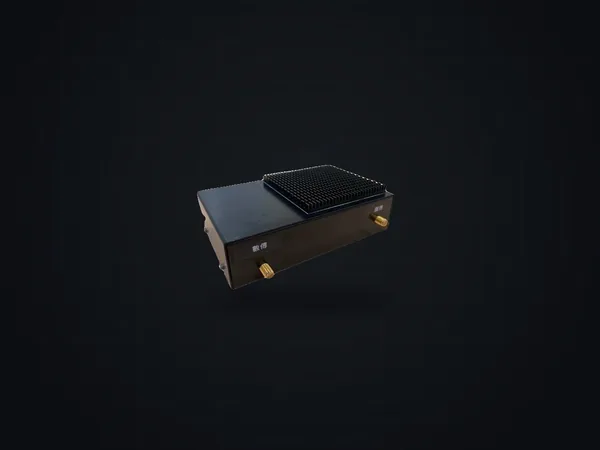
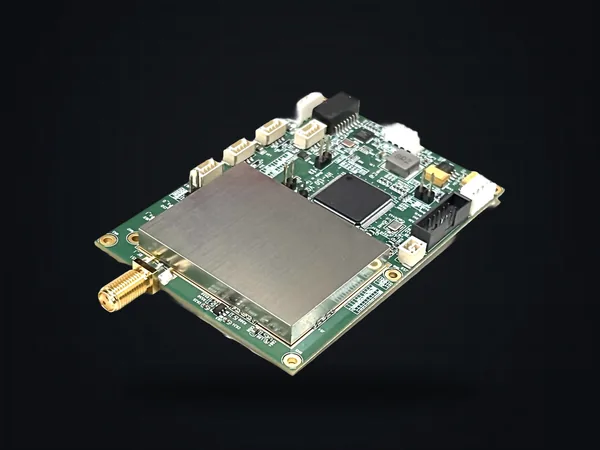
Long-Range COFDM Video Transmitter for UAV, UGV & USV
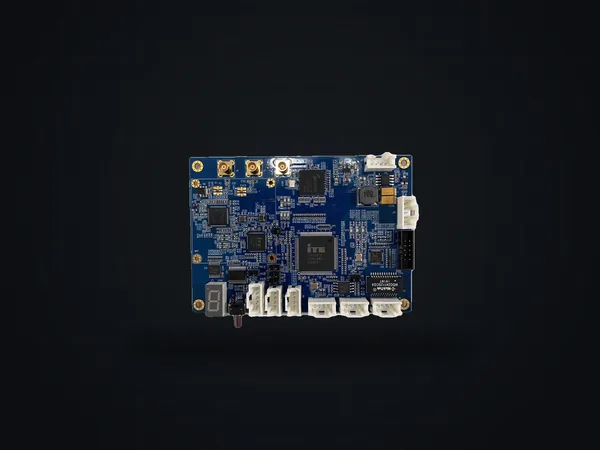
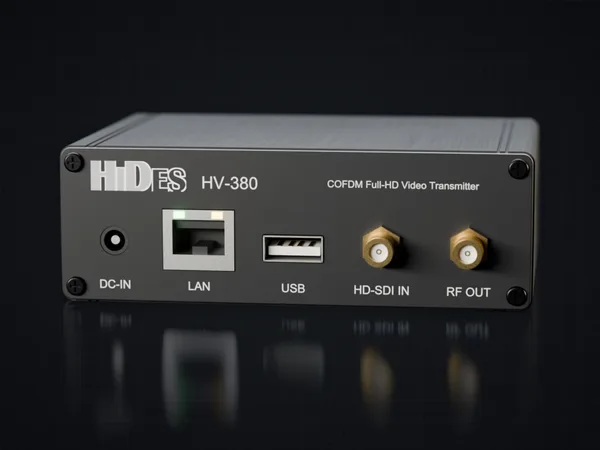
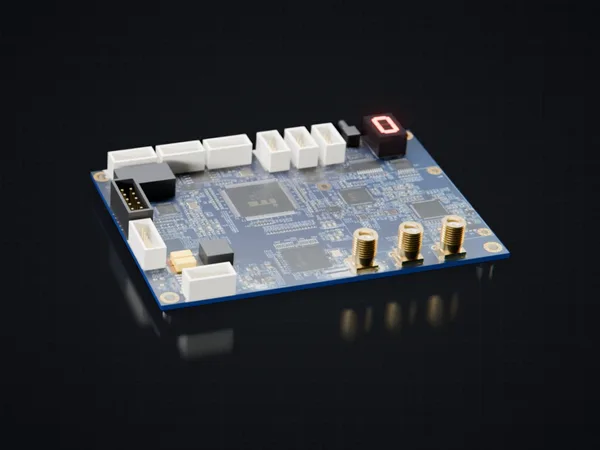
H.264 Full-HD fromHD-SDI , UVC or IP camera- 1080p60
Maximum payload, 8 MHz channel31.7 Mbps With high-power PA and directional ground antenna300+ km Bare board · 9– 30 V DC input55 g
Overview
[ The link ]
One COFDM channel for the picture, the telemetry and the network
Unmanned vehicleUAV / UGV / USV
Ground station
Camera HD-SDI · UVC · IP
Flight controller MAVLink · UART
Payload Ethernet devices
GCS / video player RTSP / RTP stream
Telemetry MAVLink to the GCS · UART
Ethernet packets Restored to the LAN
HDMI monitor
Echoes and multipathabsorbed by the guard interval
COFDM RF linkLong range · high speed · encryptedUnmanned vehicleUAV / UGV / USV
Camera HD-SDI · UVC · IP
Flight controller MAVLink · UART
Payload Ethernet devices
Echoes and multipathabsorbed by the guard interval
Ground station
GCS / video player RTSP / RTP stream
Telemetry MAVLink to the GCS · UART
Ethernet packets Restored to the LAN
HDMI monitor
- Video · COFDM RF link
- MAVLink telemetry
- Ethernet
- Echo paths
Into the HV-380
Camera video: HD-SDI or UVC, encoded to H.264 — or an IP camera’s RTP / RTSP stream, relayed without transcodingMAVLink from the flight controller, multiplexed through a UART data-mux port- Ethernet from the payload, carried as Ethernet over TS
Out of the HV-130
- RTSP / RTP video, unicast or multicast, to GCS software or a video player
- MAVLink telemetry on the local UART
- The payload’s Ethernet packets, restored to the LAN
[ Why COFDM ]
Built for where analog links break up
Analog and single-carrier links break up at low altitude, in towns, over water and at speed. COFDM spreads the data over thousands of orthogonal sub-carriers protected by a guard interval — and each condition below has a setting that answers it.
-
Multipath and echo Urban · low altitude · over water
OFDM sub-carriers with a 1/4 to 1/32 guard interval absorb the reflections from terrain, buildings and water.
-
High speed and Doppler 2K FFT mode, with its wide sub-carrier spacing, keeps fast platforms locked.
-
Long distance Narrow bandwidth, QPSK and a low code rate for maximum sensitivity; band PA options, and a high-power PA with directional ground antennas for300+ km . -
Interference and eavesdropping
1 kHz tuning to step around busy channels;AES-128 /AES-256 encryption. -
Telemetry and payload data MAVLink over the UART mux; Ethernet over TS.
[ Bandwidth vs data rate ]
Trade range against data rate
A narrow channel with QPSK and a low code rate is the most sensitive and reaches farthest; a wide channel with 64QAM carries the most. Pick a channel width and a mode to read its payload rate.
| Channel | QPSK 1/2 GI 1/4 | 16QAM 1/2 GI 1/4 | 64QAM 2/3 GI 1/4 | 64QAM 7/8 GI 1/32 |
|---|---|---|---|---|
Payload data rate
31.67Mbps
- Channel
8 MHz - Mode
- 64QAM 7/8
- Guard interval
- 1/32
[ RF output ]
One exciter from 100 to 2500 MHz
PATV
PA900
PA1200
PA2400
Without PA Maximum output
177.5 MHz 6.5 dBm 474 MHz 6.5 dBm 666 MHz 6.5 dBm 915 MHz 5.5 dBm 1250 MHz 5.5 dBm 2450 MHz 0 dBm
Specifications
System features
- 01
Long range — 300+ km links withhigh-power amplifiers and directional ground antennas - 02Anti-multipath (echo) — the COFDM guard interval absorbs reflections from terrain, buildings and water
- 03
High-speed mobility — robust against Doppler shift on fast-moving aircraft, vehicles and boats - 04
Wide, flexible bandwidth — 1– 8 MHz channels; up to31.7 Mbps payload at8 MHz - 05
Full-HD video —HD-SDI , UVC or IP camera; H.264 up to 1080p60; MP4 / TS playback from a USB drive - 06MAVLink telemetry — flight-controller data multiplexed into the video stream
- 07
Wireless IP bridge — Ethernet over TS carries payload network traffic to the HV-130 VRX - 08
Anti-eavesdropping security — AES-128 /AES-256 encryption - 09
Light, wide-range power —55 g bare board, 9–30 V DC input
Video
- Video input
-
-
HD-SDI - USB (UVC) UVC camera (YUV / MJPEG / H.264), output as H.264
- Ethernet RTP / RTSP stream from an IP camera (no transcoding)
- File playback
MP4 / MPEG-TS files on a USB flash drive, H.264 / H.265
-
- Compression
- Video H.264 (live encoding), H.264 / H.265 (file playback) · audio AAC or MPEG
HD-SDI input formats720×480 i30 (NTSC) ·720×576 i25 (PAL) ·1280×720 p50 / p60 ·1920×1080 p24 ·1920×1080 i/p50 ·1920×1080 i/p60- UVC input formats
640×480 (VGA) YUV ·1280×720 (720p) MJPEG ·1920×1080 (1080p) H.264- Video output
H.264, up to 1920×1080 p60; output frame size is the same as input (no scaling)
Interfaces and control
- Interfaces
RF out (SMA), HD-SDI in, Ethernet · UART ×3 (config port withRS-232 / 422 / 485 option, 2data-mux ports) · USB (UVC camera / flash drive, firmware update)- Web interface
- Transmission, media and network configuration, system status, firmware update
- UART
- 115200 bps, N, 8, 1 (AT commands / configuration GUI)
- AT commands over UDP
- Local AT commands: UDP port 32710 (default)
- RTP agent modes
- Camera server / player client (TCP) · RTP / RTSP relay or direct multicast (UDP / TCP) · RTP relay (multicast / UDP / SDP), ONVIF discovery
- Ethernet over TS
- Forwards incoming Ethernet packets into the transmitted TS (enable / disable)
Power and mechanical
- Power input
9– 30 V DC- Power consumption
-
-
HV-380 (no PA)470 mA @12 V - PATV / PA900 / PA1200
710 mA @12 V - PA2400
720 mA @12 V (startup2.7 A @12 V )
-
- Dimensions (W × D × H)
105 × 75 ×35 mm (bare board100 × )70 mm - Weight
175 g (bare board55 g )- Operating temp.
− 10 °C ~60 °C
Digital TV RF transmitter
- TV standard
-
-
HV-380E DVB-T , EN 300 744 -
HV-380J ISDB-T ARIBSTD-B31 ,ISDB-Tb ABNT NBR 15601 (13 segments)
-
- RF connector
50-Ω SMA- Frequency range
100– 2500 MHz ,1 kHz step- Bandwidth
-
-
HV-380E 1 / 2 / 3 / 4 / 5 / 6 / 7 / 8 MHz -
HV-380J 6 MHz
-
- Constellation
- QPSK, 16QAM, 64QAM
- FFT
- 2K, 4K, 8K
- Code rate
- 1/2, 2/3, 3/4, 5/6, 7/8
- Guard interval
- 1/4, 1/8, 1/16, 1/32
- Encryption
AES-128 at RF layer and TS layerAES-256 - Digital gain / attenuator
0 dB to −47 dB ,1 dB step (default −5 dB )- MER (typical)
-
-
VHF and 470– 950 MHz > 38 dB -
950– 1900 MHz > 35 dB -
1900– 2500 MHz > 33 dB -
With + 20 dBm band PA> 25 dB
Measured at − 5 dB attenuation -
- Spectrum shoulder
> 48 dB (adjacent channel)- Phase noise
< −92 dBc @ 10 kHz - Carrier suppression
> 42 dB - Max. output (no PA)
-
-
177.5 MHz 6.5 dBm -
474 MHz 6.5 dBm -
666 MHz 6.5 dBm -
915 MHz 5.5 dBm -
1250 MHz 5.5 dBm -
2450 MHz 0 dBm
-
Ordering
HV-380x 100– 2500 MHz , no power amplifierHV-380x-PATV 400– 800 MHz band PA, > +23 dBm average OFDM outputHV-380x-PA900 700– 1000 MHz band PA, > +23 dBm average OFDM outputHV-380x-PA1200 1000– 1500 MHz band PA, > +23 dBm average OFDM outputHV-380x-PA2400 2100– 2500 MHz band PA, > +23 dBm average OFDM outputHL-100T (optional)- LCM configuration tool
[ Next steps ]
Bring the HV-380 into your project
Tell us your vehicle, range and band, and HiDes will help plan the configuration. The full datasheet is available by email on request.
info@hides.com.tw ·
Works with